
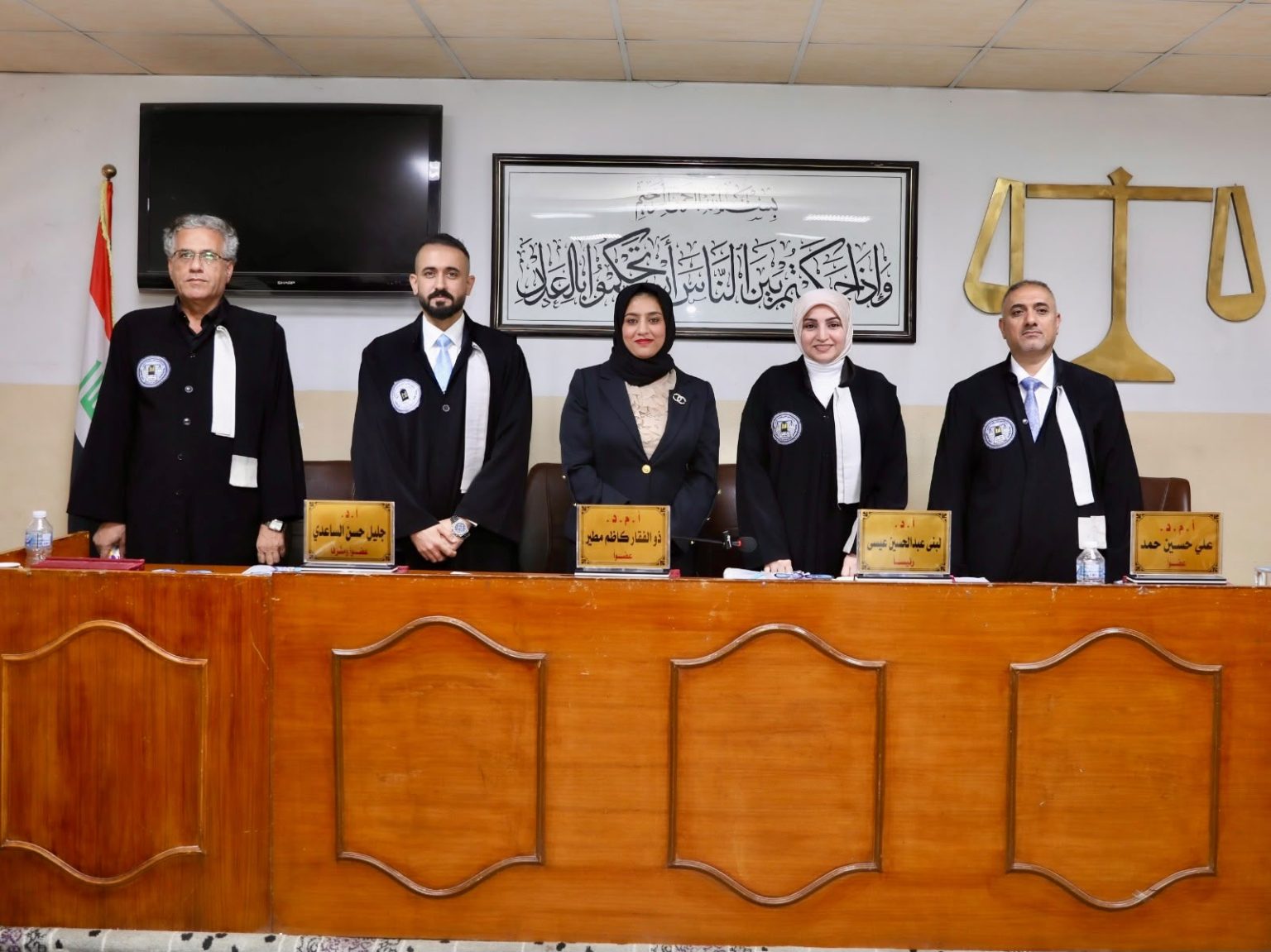
The College of Law – University of Baghdad discussed a Master’s thesis entitled “Civil Litigation through Artificial Intelligence Systems,” submitted by the student Muna Abdul-Hussein Issa at the Private Law Department, on Sunday, July 5, 2026, at the College’s Virtual Court Hall.
The examination committee consisted of the following professors:
1. Prof. Dr. Lubna Abdul-Hussein Issa (Chairman)
2. Asst. Prof. Dr. Dhu al-Fiqar Kadhim Mutair (Member)
3. Asst. Prof. Dr. Ali Hussein Hamad (Member)
4. Prof. Dr. Jalil Hassan Bashat (Member and Supervisor)
The thesis aimed to clarify the legal framework of civil litigation through artificial intelligence systems, examine the role of these systems in developing civil judicial procedures, analyze civil liability and the legal and technical challenges arising from their use, and assess the adequacy of the existing legal rules governing them. It ultimately sought to establish a legal framework that keeps pace with technological developments, enhances the efficiency of justice, and preserves procedural guarantees.
The thesis consisted of three chapters. The first chapter addressed the conceptual framework of civil litigation through artificial intelligence systems. The second chapter examined the uses of artificial intelligence systems in civil judicial procedures and their role in supporting judicial decision-making. The third chapter discussed civil liability and the legal and technical challenges arising from the use of artificial intelligence systems in civil litigation.
The thesis presented several recommendations, the most important of which were:
1. The need to expedite the enactment of a specific Iraqi law regulating civil litigation through artificial intelligence systems as an integrated legal framework that defines the rights, obligations, and liabilities arising from the use of these systems in civil justice.
2. The inclusion of Law and Artificial Intelligence as a subject in the curricula of the Iraqi Judicial Institute, along with intensified training courses for judges to enable them to effectively supervise intelligent systems and understand their technical outputs.
3. The adoption of a flexible and sustainable legislative policy based on developing legal provisions in line with the rapid advancements in artificial intelligence technologies, while ensuring the protection of rights and the achievement of justice in civil litigation.