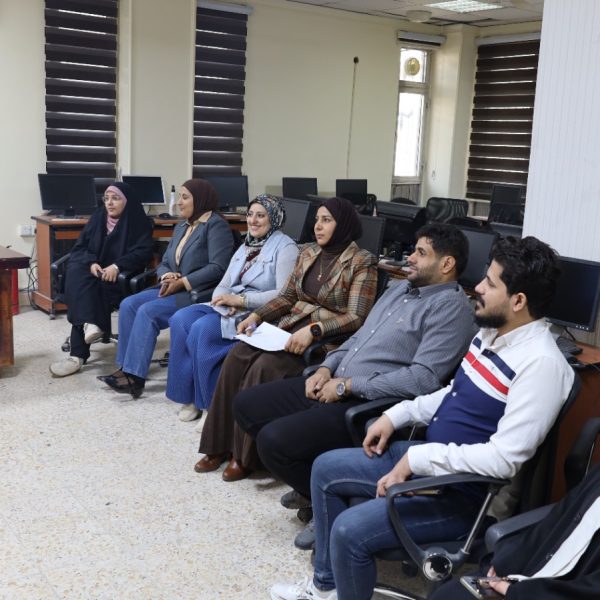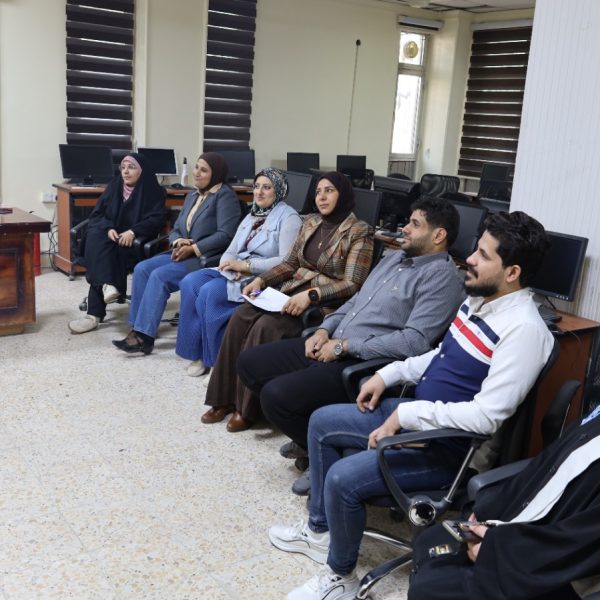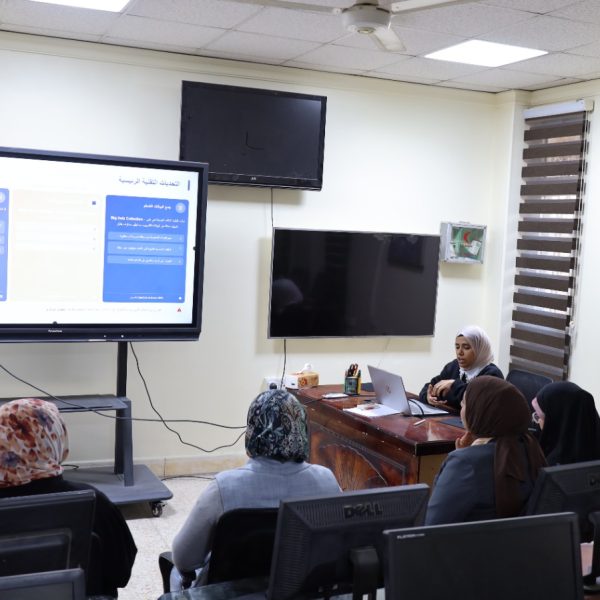
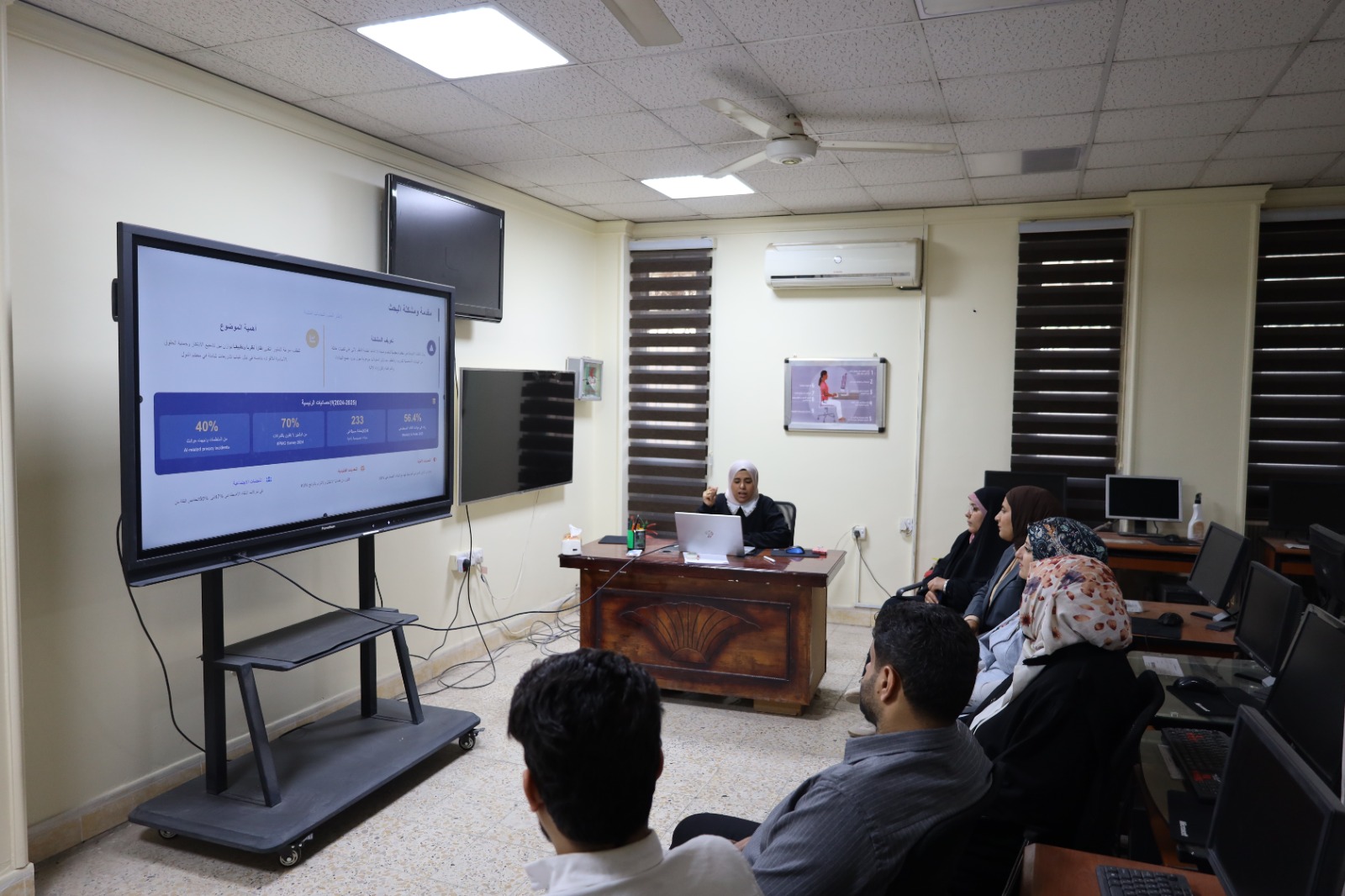
The College of Law at the University of Baghdad organized a scientific workshop on Thursday, 19 February 2026, at the College of Law building entitled “Artificial Intelligence and the Right to Privacy.” The workshop was delivered by Assistant Lecturer Alaa Mohammed Basil, and was attended by a number of faculty members and employees.
The workshop aimed to raise awareness within the academic community about the risks of artificial intelligence applications to the right to privacy, and to analyze the international and local legal frameworks regulating data protection, in addition to presenting modern technical mechanisms for protecting personal information, with the goal of developing practical recommendations that academic and governmental institutions can adopt in this field.
The workshop included several main topics, including:
1.Explaining the research problem related to artificial intelligence technologies and their impact on privacy.
2.The technical challenges posed by intelligent systems in collecting and analyzing data.
3.The legal framework regulating data protection at both the international and local levels.
4.The protection of individual rights in light of rapid technological development.
5.Practical applications of artificial intelligence and their impact on personal data.
6.Possible technical solutions to enhance information security and ensure privacy.
The workshop concluded with several recommendations, the most important of which were:
1.Adopting the principle of Privacy by Design when developing intelligent systems.
2.Conducting a Privacy Impact Assessment before implementing any project based on artificial intelligence technologies.
3.Strengthening the principles of accountability and transparency in the design and operation of algorithms.
4.Supporting international cooperation to unify legal and technical standards related to data protection.
This workshop is part of a series of scientific activities organized by the College of Law to keep pace with modern technological developments and to enhance legal awareness within the academic community.