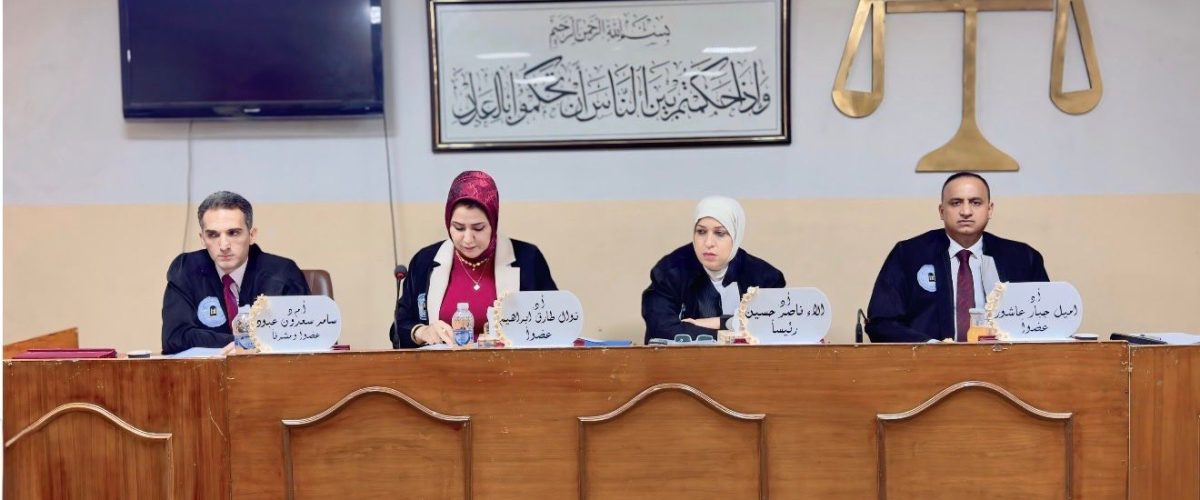

The College of Law – University of Baghdad discussed a Master’s thesis entitled “The Criminal Legislative Confrontation of the Unlawful Use of Artificial Intelligence Systems: A Comparative Study,” submitted by the student Hajar Miqdad Hatem in the Department of Criminal Law. The defense was held on Wednesday, February 11, 2026, in the Model Court Hall at the College.
The examination committee consisted of:
1.Prof. Dr. Alaa Nasser Hussein – Chair
2.Prof. Dr. Nawal Tariq Ibrahim – Member
3.Prof. Dr. Ameel Jabbar Ashour – Member
4.Asst. Prof. Dr. Samer Saadoun Aboud – Member and Supervisor
The thesis aimed to examine the adequacy of traditional criminal legislation in addressing unlawful acts related to the use of artificial intelligence systems. It also sought to identify legislative shortcomings in this field and to benefit from comparative legislative experiences in order to develop an integrated legal framework that strengthens criminal protection against the risks of misuse of artificial intelligence systems within Iraqi law.
The thesis consisted of three chapters. The first chapter examined the nature and concept of artificial intelligence. The second chapter discussed the legal frameworks governing crimes related to artificial intelligence systems. The third chapter addressed international and national efforts to confront the unlawful use of artificial intelligence systems.
The thesis concluded with several recommendations, the most important of which include:
1.The need for Iraqi legislators to enact a special law addressing artificial intelligence crimes, including clear definitions of criminal conduct, penalties, and the distribution of criminal responsibility among the parties involved.
2.Issuing clear regulations to define the standards and procedures necessary for the development and importation of artificial intelligence systems, ensuring compatibility with the social and religious values of the state.
3.Establishing specialized courts responsible for investigating and adjudicating crimes arising from the use of artificial intelligence applications and other electronic means, staffed with judges and prosecutors knowledgeable about modern technologies, along with ensuring their continuous training on emerging technologies.