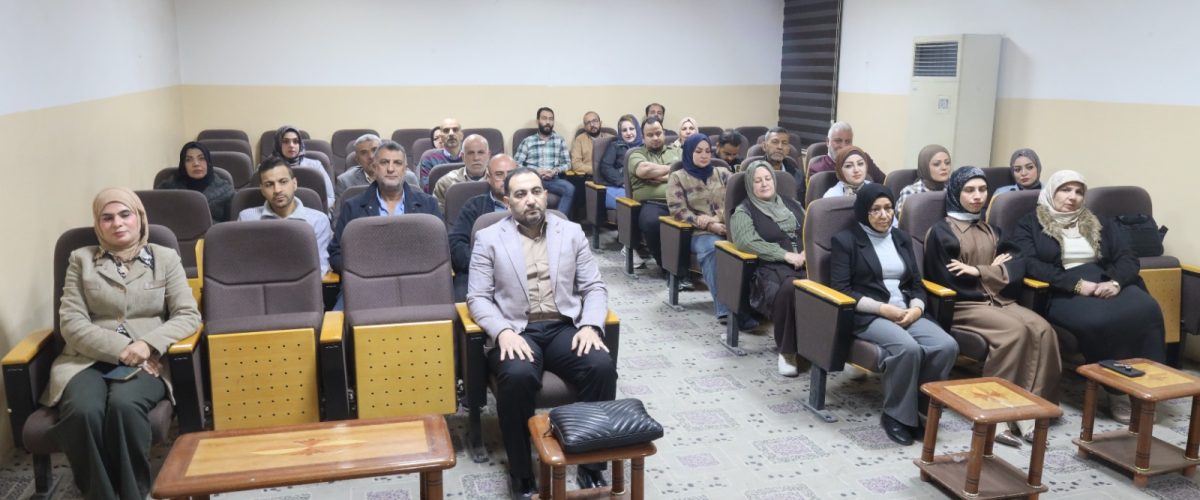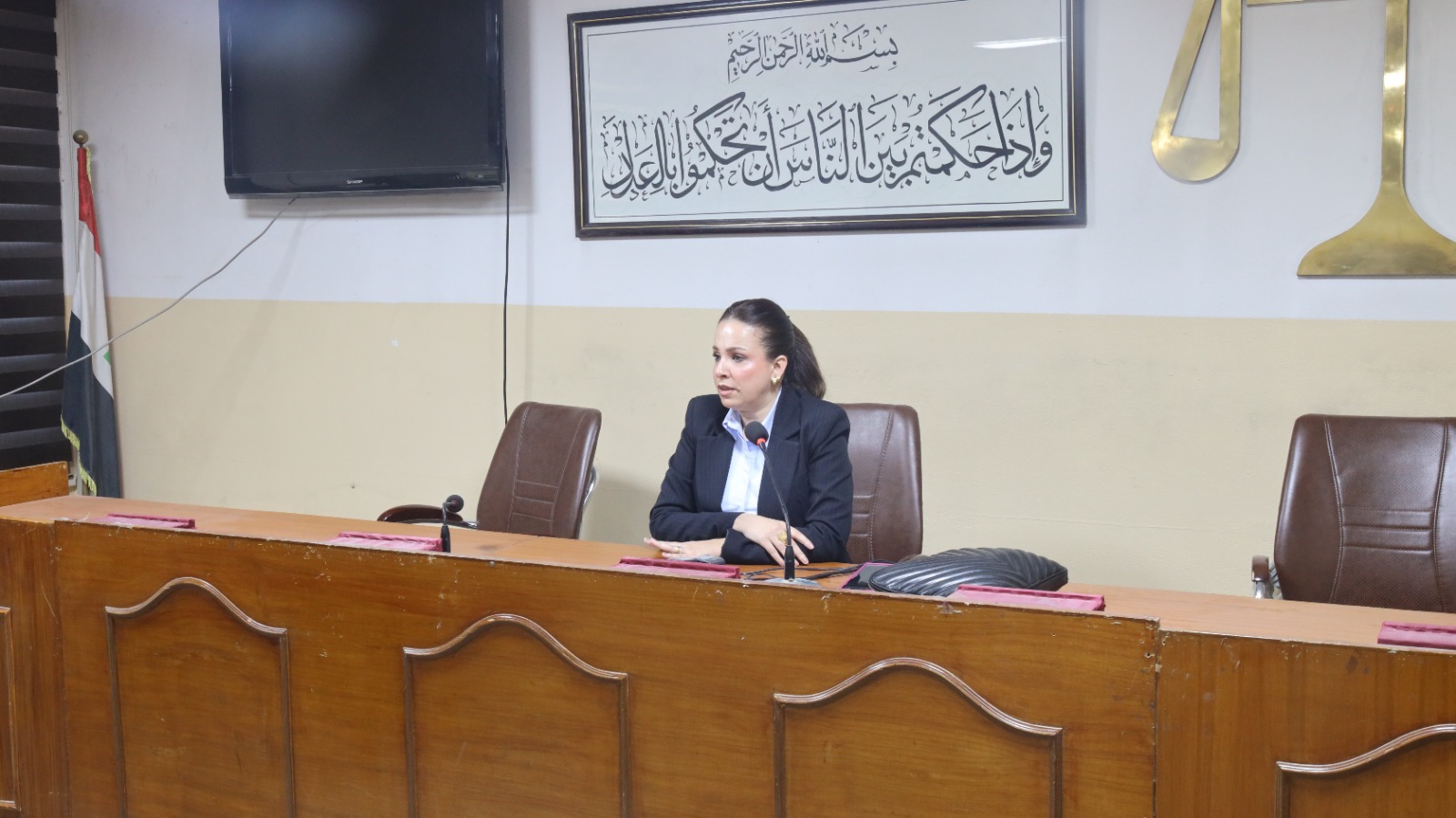
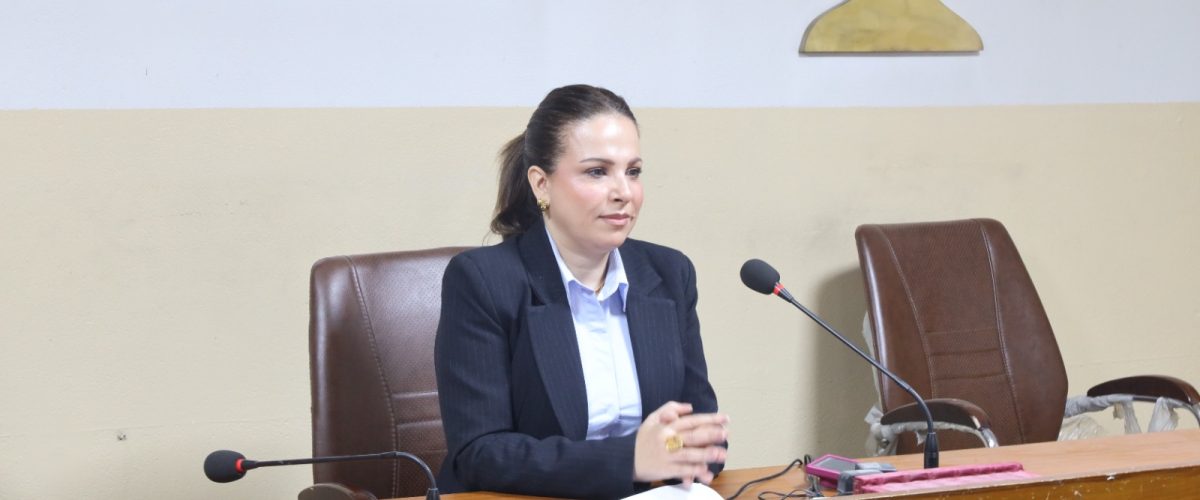
The Public Law at the College of Law – University of Baghdad organized a scientific seminar entitled “Constitutional Judiciary in Iraq: Between Abstention and Unconstitutionality”, presented by Assistant Professor Dr. Sura Harith Abdul Karim, a college member in the Department of Public Law, on Thursday, November 27, 2025, in the college’s Model Court Hall.
During the seminar, the lecturer discussed the stages of judicial review of the constitutionality of laws in Iraq, from the establishment of the modern Iraqi state in 1921 to the present. She explained that this review went through three historical phases linked to political transformations, changes of power, and constitutional amendments.
The seminar addressed the first phase, which witnessed the existence of constitutional texts and specialized institutions for judicial review, such as those in the 1925 Basic Law and the 1968 Constitution; however, these institutions were unable to effectively exercise their role.
The second phase was characterized by the absence of constitutional provisions authorizing judicial review under the revolutionary and provisional constitutions, including the abolished 1970 Constitution. During this period, abstention review was not implemented due to the judiciary’s lack of independence and fear of the authorities at the time. Only one case was recorded in which a judge attempted such review and faced punishment.
The third phase began with the establishment of the specialized constitutional judiciary starting from the State Administration Law for the Transitional Period of 2004 and continuing with the 2005 Constitution of the Republic of Iraq. Today, the Supreme Federal Court exercises ex-post judicial review over the constitutionality of laws and regulations and has, over the past years, annulled numerous legislative provisions that violate the constitution, functioning as an independent judicial authority.