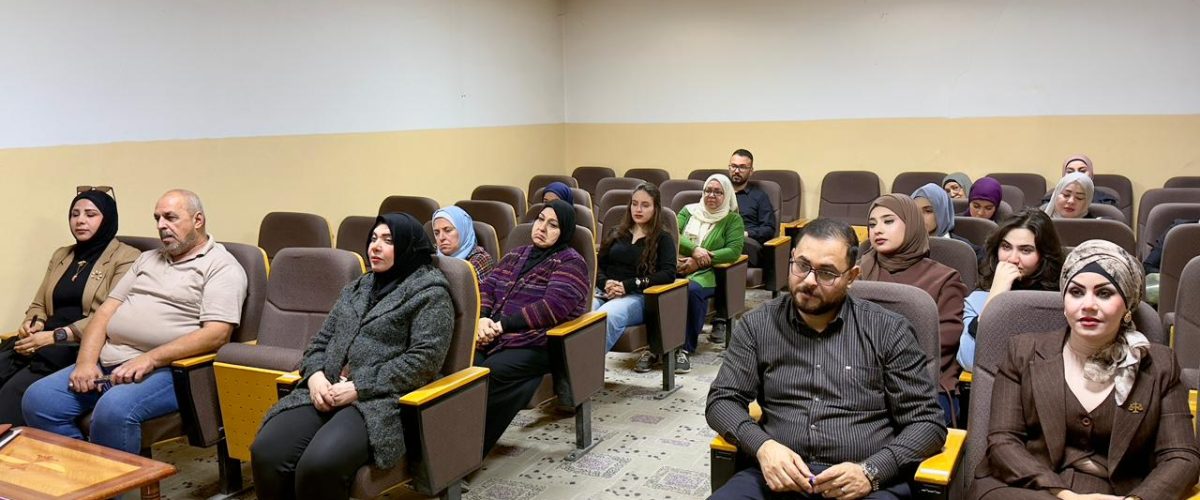
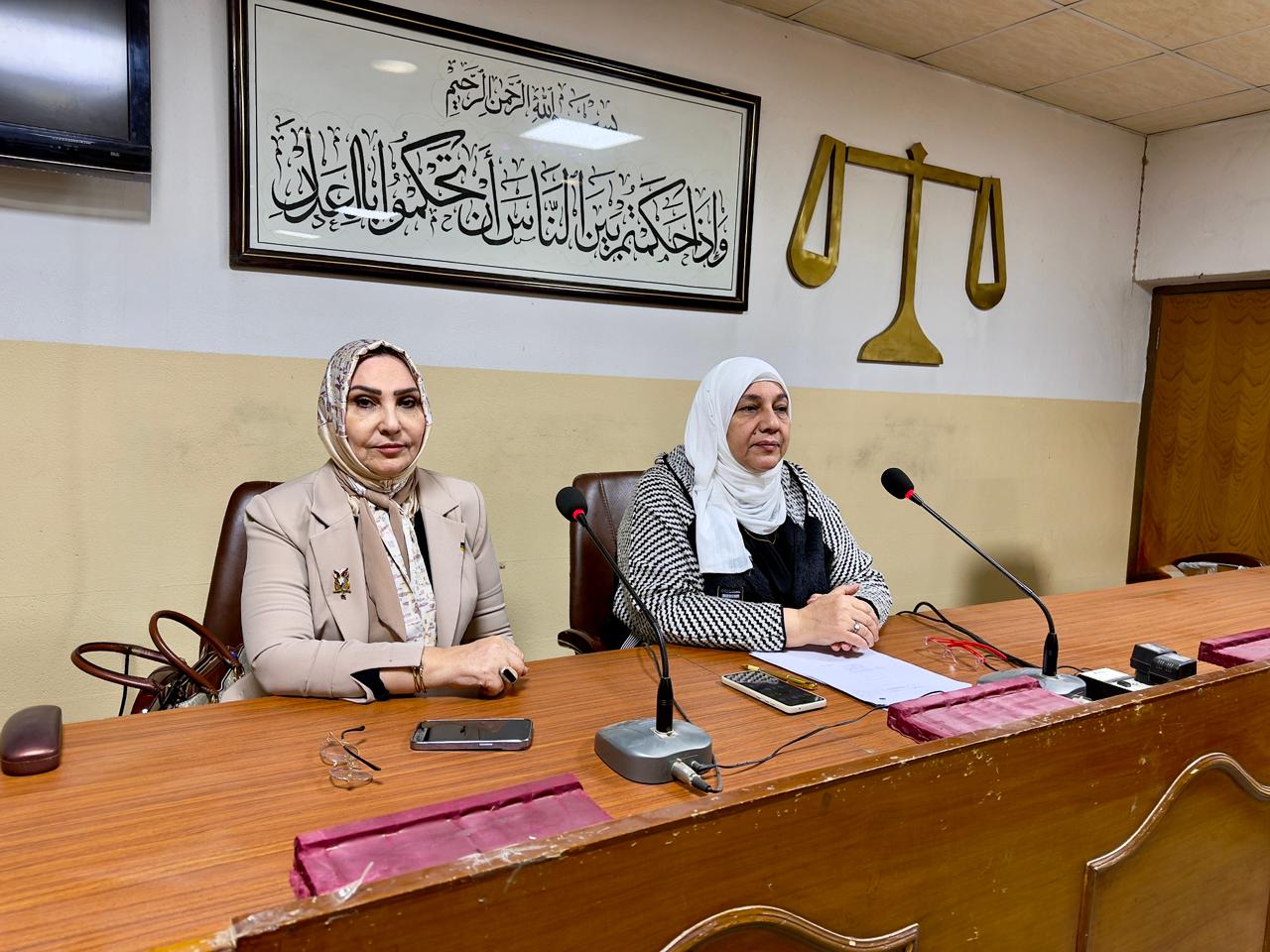
The Women’s Affairs Unit at the College of Law – University of Baghdad, in collaboration with the Women’s Affairs Unit at the College of Engineering, organized a seminar titled:
“The Rights of Working Women under the Current Iraqi Labor Law and Proposed Amendments to Strengthen Them.”
The seminar was presented by Asst. Prof. Dr. Rabab Khalil Ibrahim and Asst. Prof. Dr. Ilham Ali Bayouy, as part of the Participation and Institutional Reform axis, on Monday, 24/11/2025, at the Moot Court Hall in the college.
The seminar aimed to enhance the legal and social protection of working women, and to ensure a fair and safe work environment that contributes to increasing their economic participation and professional empowerment.
The seminar covered two main topics:
- The first topic reviewed Iraqi Labor Law No. 37 of 2015 and its provisions regarding the basic rights of working women, including:
- Maternity protection
- Pregnancy and childbirth leave
- Prevention of discrimination in employment and wages
- Ensuring a workplace free from harassment
- The second topic focused on proposed amendments aimed at developing current legislation, including:
- Implementing deterrent measures against discrimination and harassment
- Strengthening oversight mechanisms and activating complaint procedures
- Including explicit provisions to combat gender-based violence in the workplace
- Increasing paid leave periods and encouraging employers to provide daycare facilities within institutions
The seminar concluded with a set of important recommendations, most notably:
- Repealing Article 93 of the law, which excludes working women from legal protection if they work under the management of a family member, due to the lack of sufficient guarantees for fair treatment.
- Tightening penalties on employers who violate the provisions of Chapter Ten regarding the protection of working women and their children, as the current penalties are not deterrent.
- Amending Clause 2 of Article 91 to grant working women the right to take leave to care for a sick child based on actual need, without limiting it to three days, especially since these days are counted without pay.
-
Establishing a clear list of hazardous work in terms of job nature and timing, covering all working women without exception—married or unmarried, with or without infants, and ranging from young to older employees.